Next-DC • Campaign sites
Interactive campaigns
Award-winning work for Heineken, Visa and Telenor.
Key summary
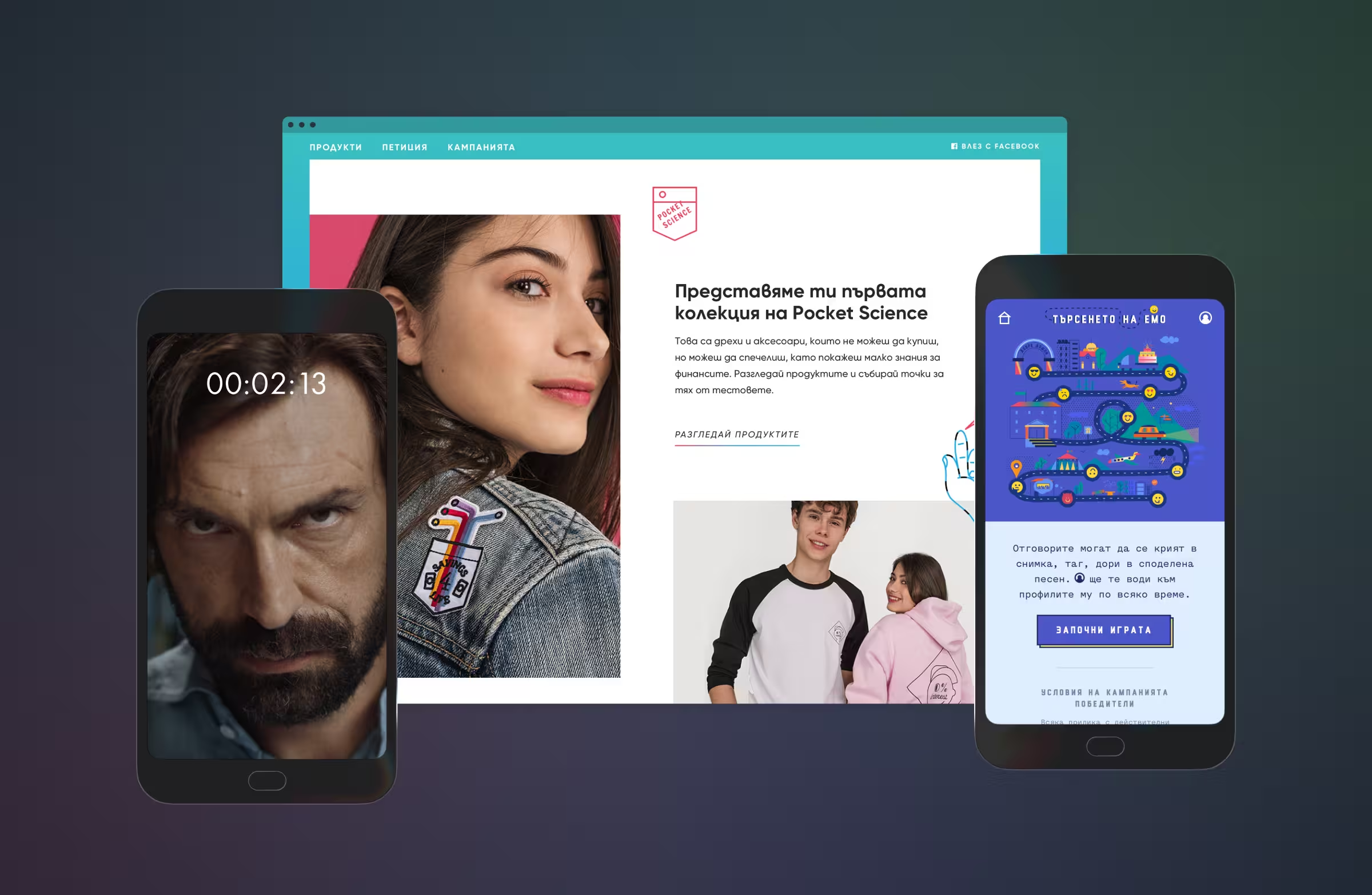
Before moving into product, I spent five years at Next-DC, an independent creative agency in Sofia. I was responsible for designing and overseeing the development of the digital and interactive experiences for our campaigns. In the three here, the digital experience wasn’t an ad for the campaign, it was the campaign: a staredown against a footballer, a fashion brand you bought with knowledge instead of money, and the search for a teenager who didn’t exist.
Heineken: The Focus
As a sponsor of the 2019 UEFA Champions League, Heineken’s message to football fans was simple: don’t even blink. The matches can be so dynamic that even a small distraction could make you miss a game changer.
The idea
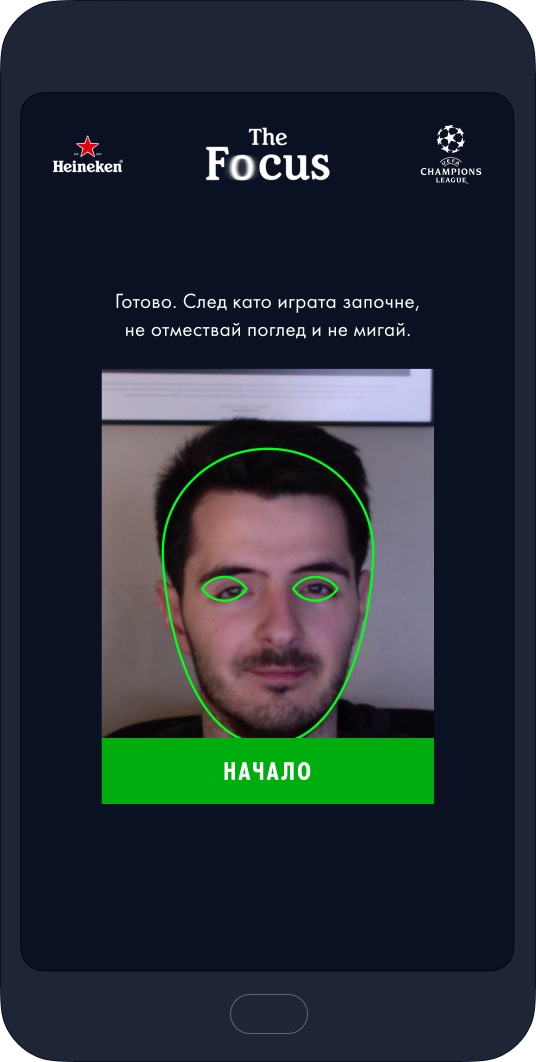
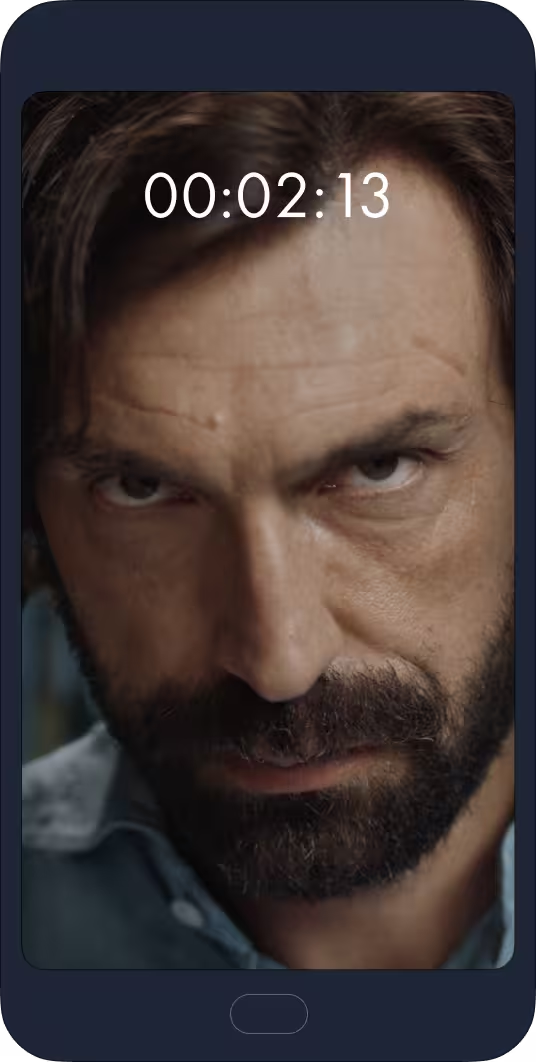
We created The Focus: an interactive experience, in which Heineken challenged football fans to stare down Andrea Pirlo, a player known for his concentration on the field. Blink or look away and it’s over. Face tracking through your device’s camera did the judging.
The safe build at the time was a native mobile app, or a desktop-only site where the webcam behaved predictably. We decided to take up the technical challenge instead. Running the face tracking in a browser, on a phone, was the harder build — but it meant no install, no store listing, and a campaign you could reach from a link. That’s what turned a technically interesting idea into something a hundred thousand people could try in seconds.
Results
127k
Visits
38k
Staredowns
5:08
Average time
per player
1430
Leads
collected
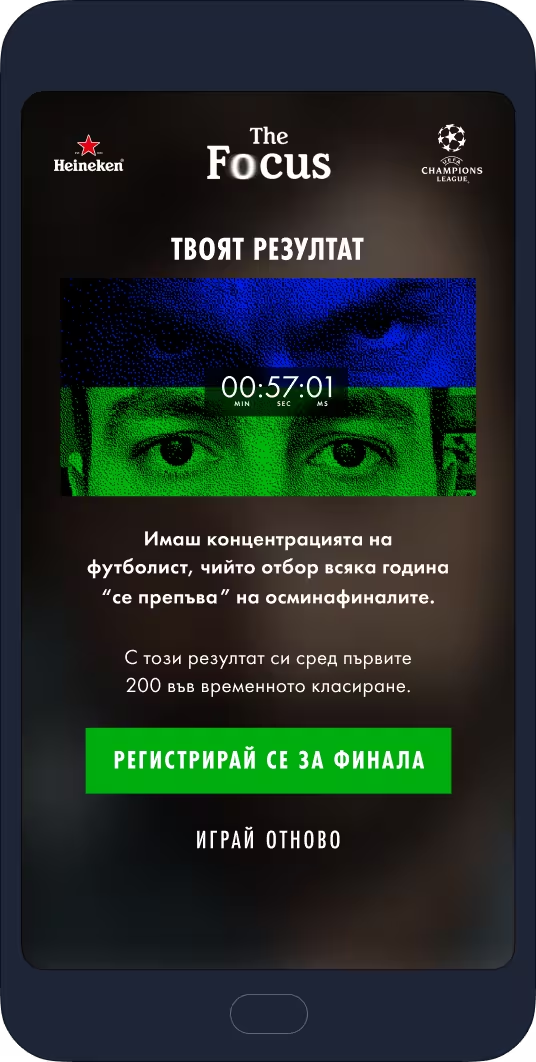
Attempts were unlimited, and people kept coming back to beat the top score. Some even tried to cheat the system, mounting printed photos and book covers in front of their webcams. At the end, the hundred best scores won double passes for an exclusive screening of the Champions League final.
Recognition
-
🥇
Gold
Websites, Microsites
and Mobile Apps FARA 2019 - 🥇 1st place Best Engagement Campaign IAB MIXX Awards 2020
- 🥉 Bronze Digital Craft FARA 2019
- 🥉 Bronze Campaign / Goods FARA 2019
- 🏅 Nomination Innovation FARA 2019
Visa: Pocket Science
In 2017 Visa started an initiative to close the gap between teenagers’ interest in their own pocket money and their disinterest in finance. Its goal was to get the subject into Bulgarian secondary schools and improve students’ financial literacy.
The idea
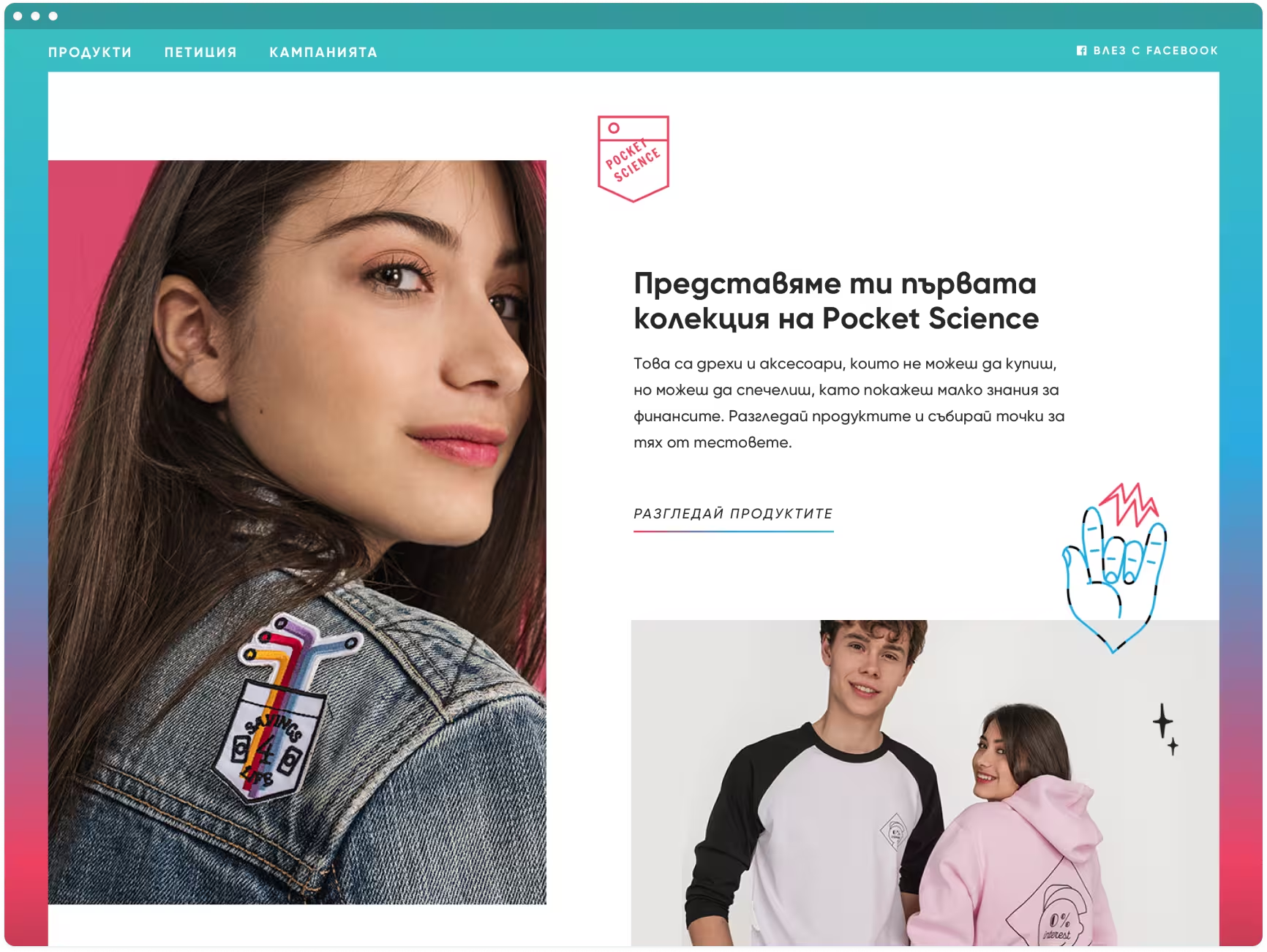
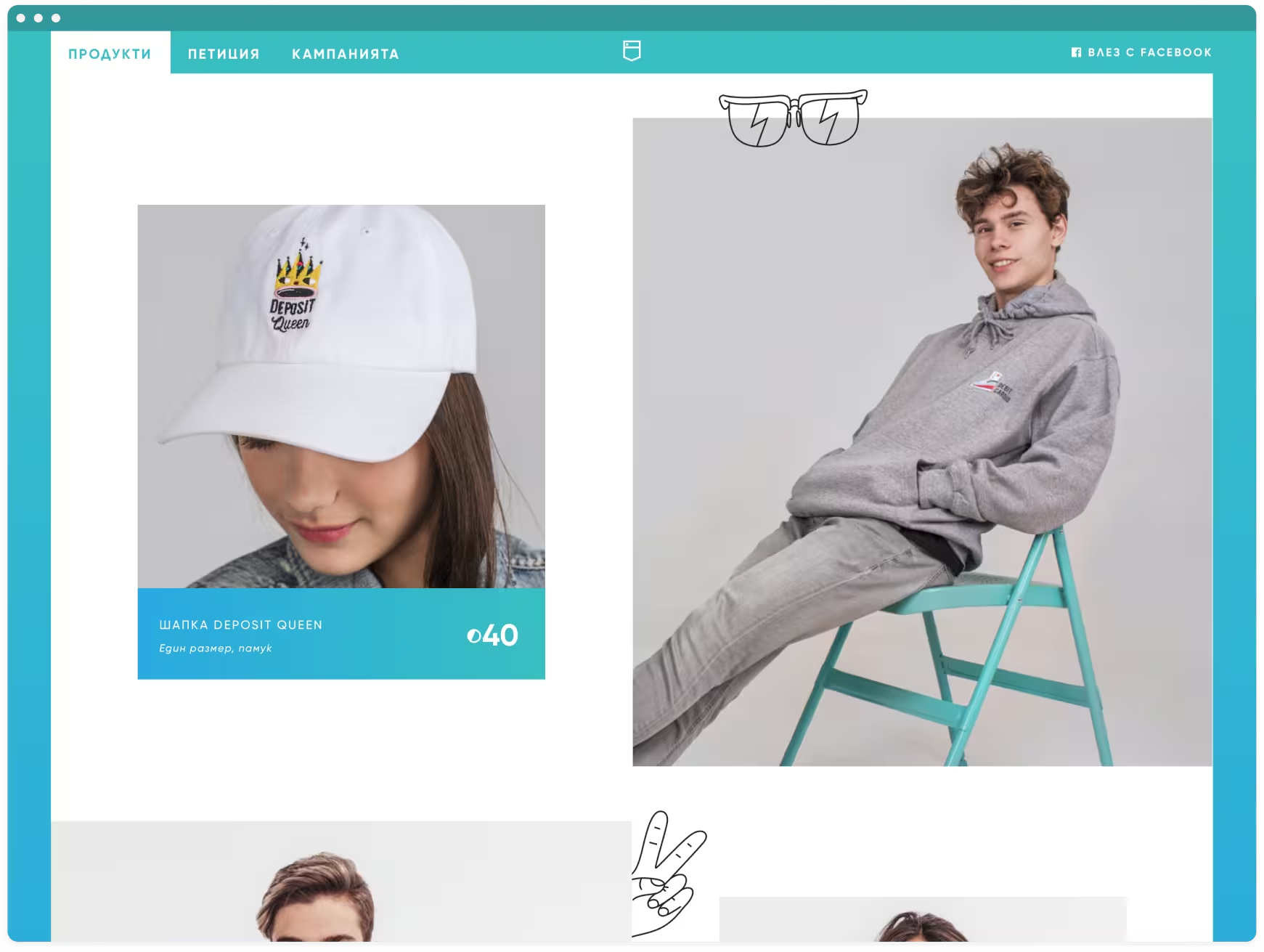
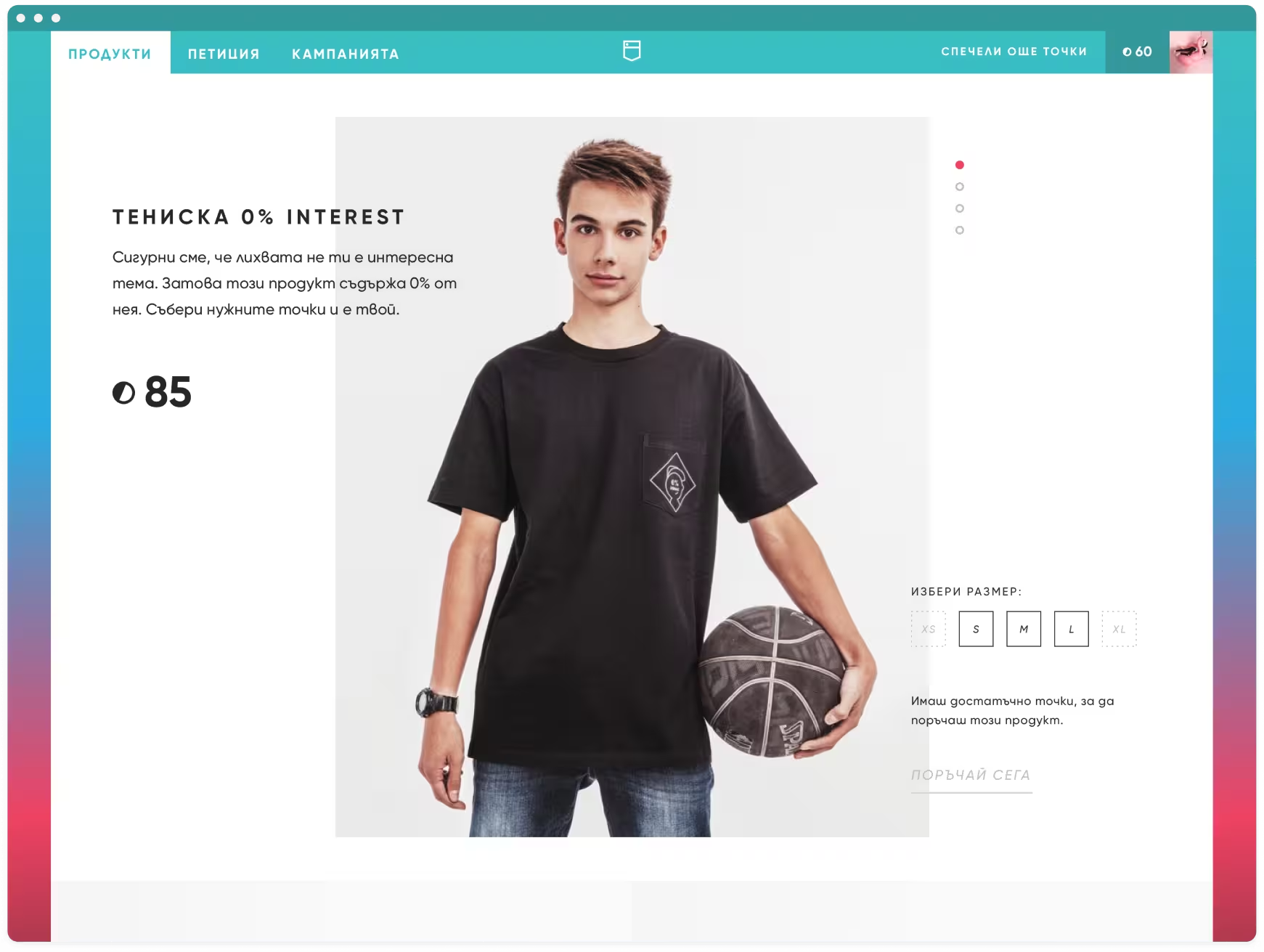
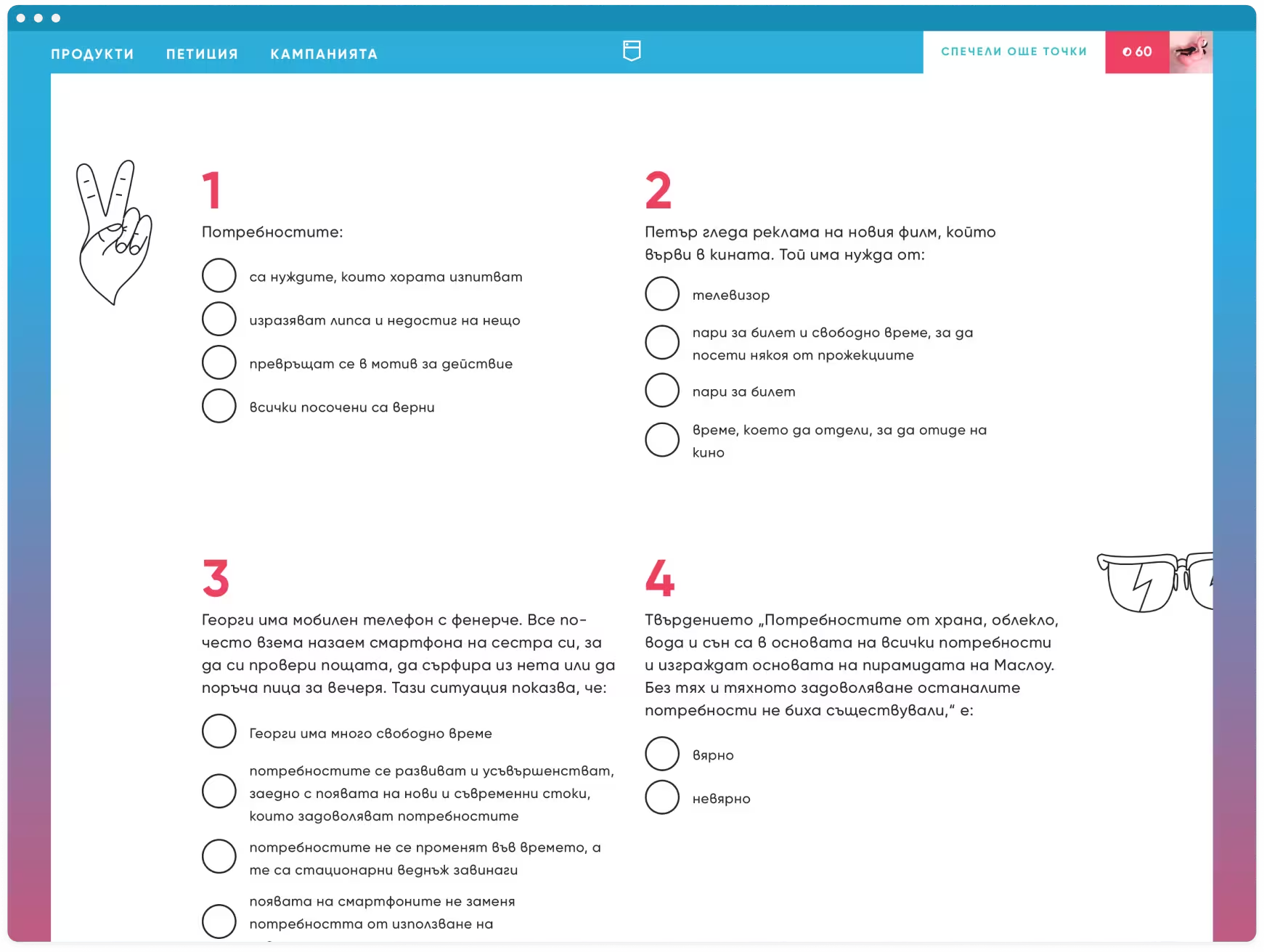
Teenagers can’t earn money but want to have nice things. So we created Pocket Science, a fashion brand you bought with knowledge: a collection of oversized sweatshirts, tees, caps and patches. The prints were where we made the subject fun, with finance puns like Deposit Queen and Debit Cardio.
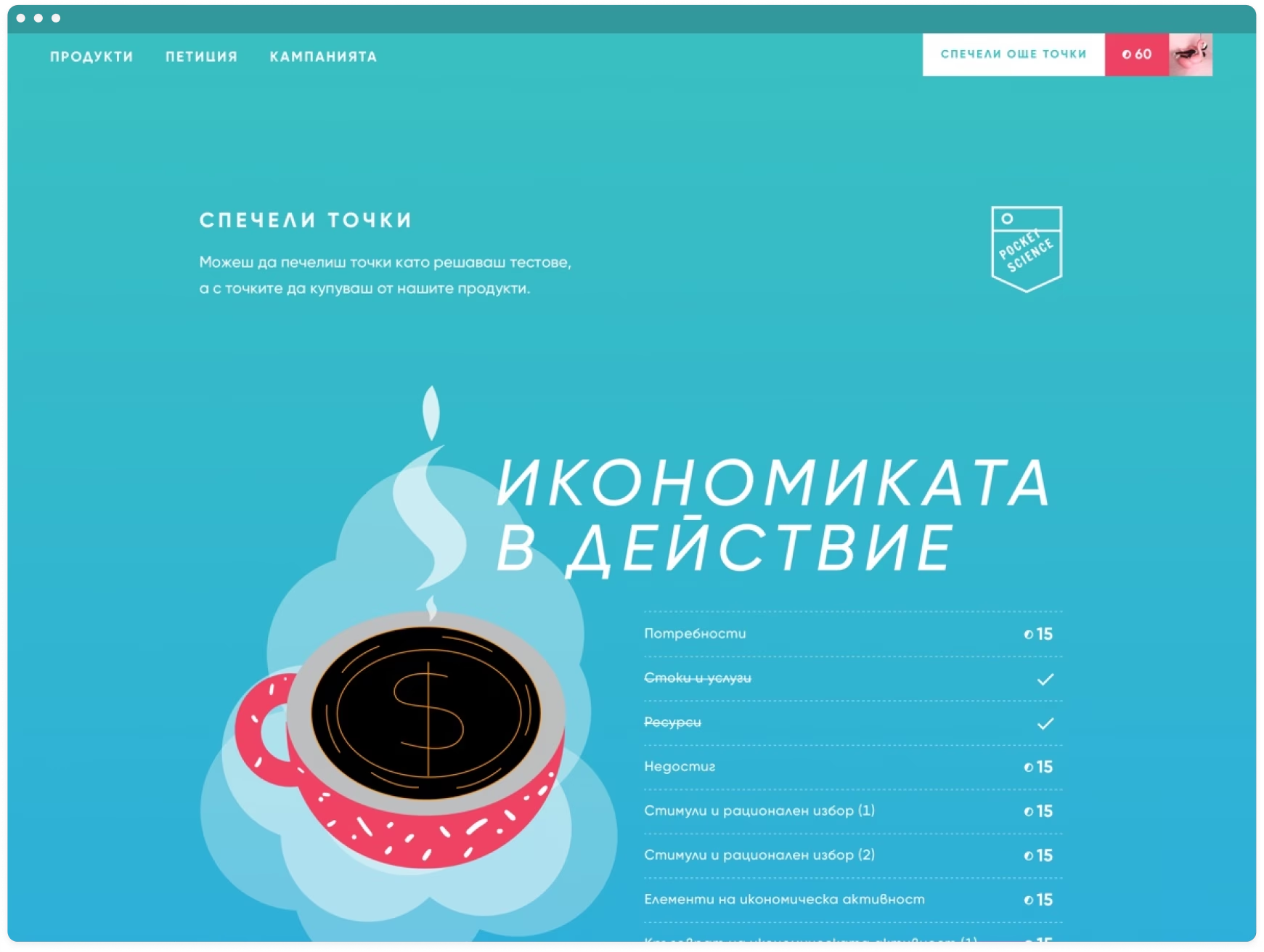
The entry point was an online shop like any other, but with prices listed in points. Behind it was the test portal, showing through as the gradient frame around every page. It was always open, whether you were short of points or just curious.
Most campaigns like this hand out badges, streaks and leaderboards — points that buy more points. Here the points were the currency that bought a sweatshirt a fifteen-year-old actually wanted.
Results
33.5k
Tests passed
9:00
Average visit
length
649
Schools signed
the petition
230k
Students
reached
On average, students spent 9 minutes on the website, with some going to extremes — the longest visit was 4.5 hours. After the tests they were asked to join a petition to get financial literacy into their own school’s curriculum, and students from 649 schools across 186 towns signed it.
Following the 2017 campaign’s success, Visa relaunched it the next year with a new collection. The site kept running long after that: by 2020 it had reached over 230,000 students.
Recognition
- 🥇 1st place Engagement IAB MIXX Awards 2018
- 🥈 Silver Digital Campaign FARA 2018
Telenor: Finding Emo
For Safer Internet Day 2017, Telenor and the Centre for Safe Internet wanted teenagers to think before posting. The numbers were hard to argue with: over six years the average age of a Bulgarian child’s first time online had dropped from 10 to 7, a third of children had talked to a stranger online, and about a fifth of those had gone on to meet them.
The idea
Nobody changes their behaviour because they were told to, especially kids. We had to find a different way to make them think.
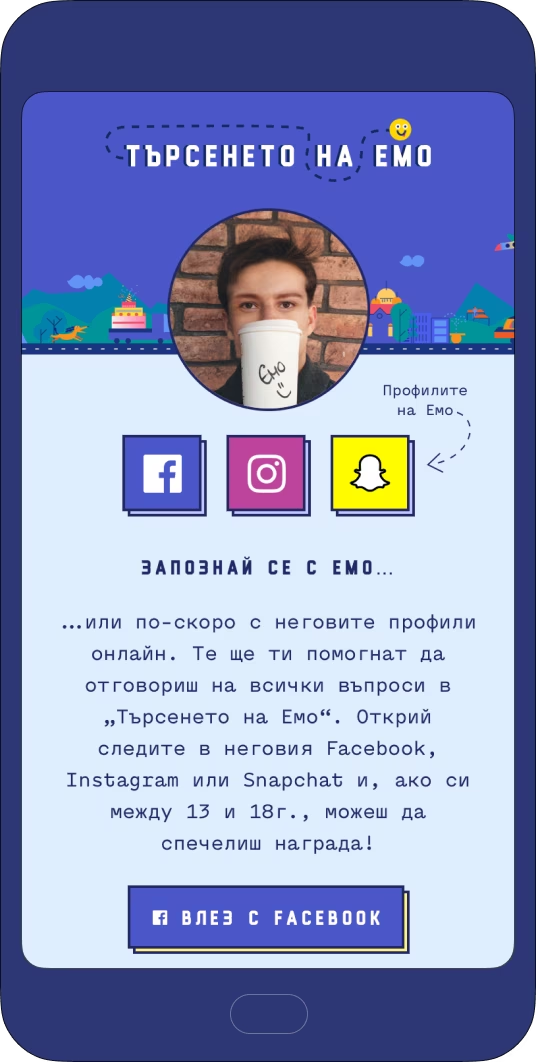
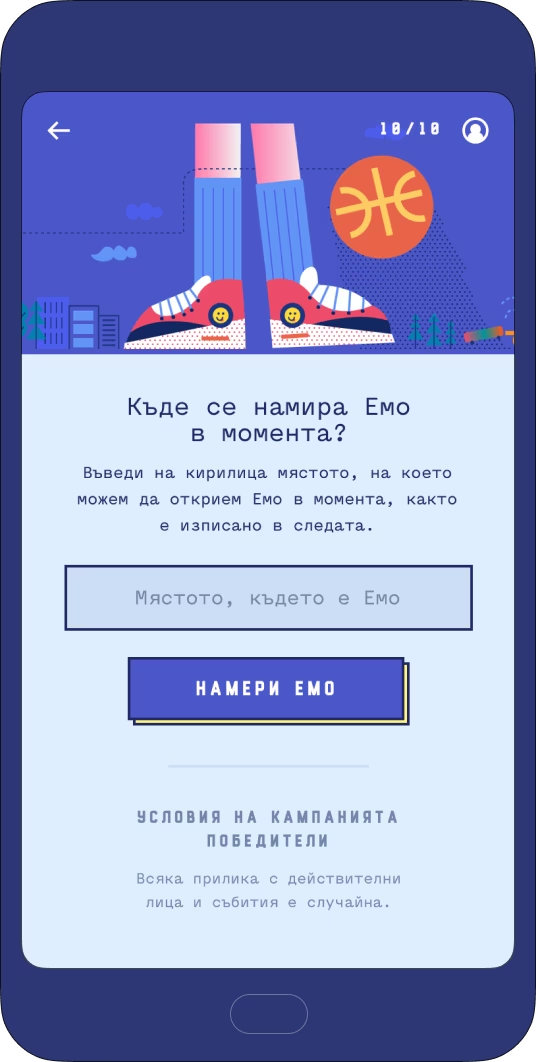
First, we invented a fake teenager. Emil Dobromirov, or Emo, had a Facebook, an Instagram and a Snapchat, all filled with ordinary posts. Hidden inside them was everything you’d need to find him: from his school and his home address, all the way to his current location. The posts came out of our team’s personal archives, and in the pre-AI era his face had to be professionally retouched into someone who didn’t exist, so no real child was exposed.
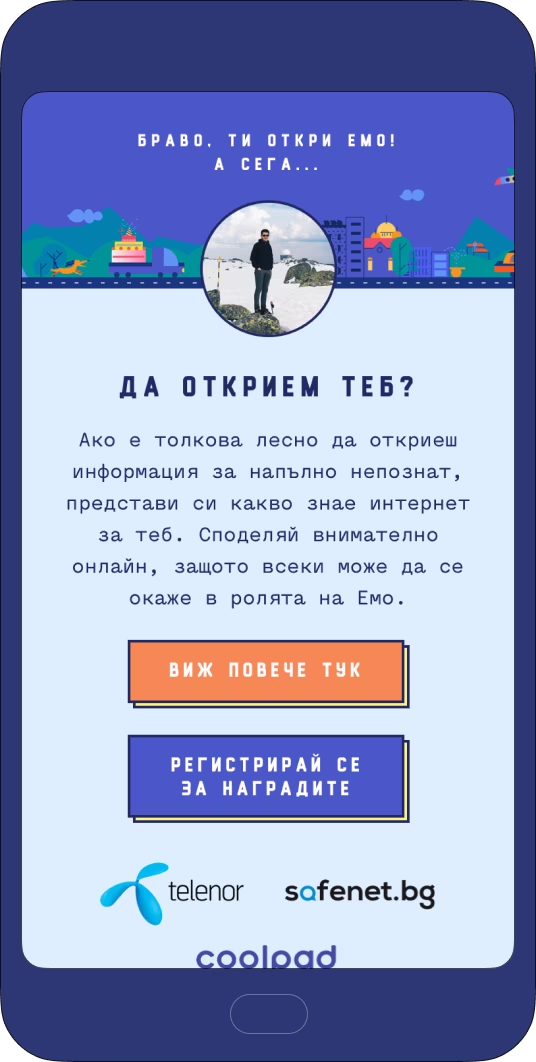
We then invited teenagers to a ten-question quiz about him. But the answers weren’t hidden in screenshots on the campaign’s microsite. To learn where his summer house was, they went to his actual Instagram and found the location tagged on a post. Keeping it all on the microsite would have been an easier campaign to run, but it would also have made the whole thing a simulation of stalking rather than the real thing. Doing it properly is what let the message on the last screen work: “You found him — now, shall we find you?”
That discomfort was the point; without it, nobody would have looked at what they share the same way.
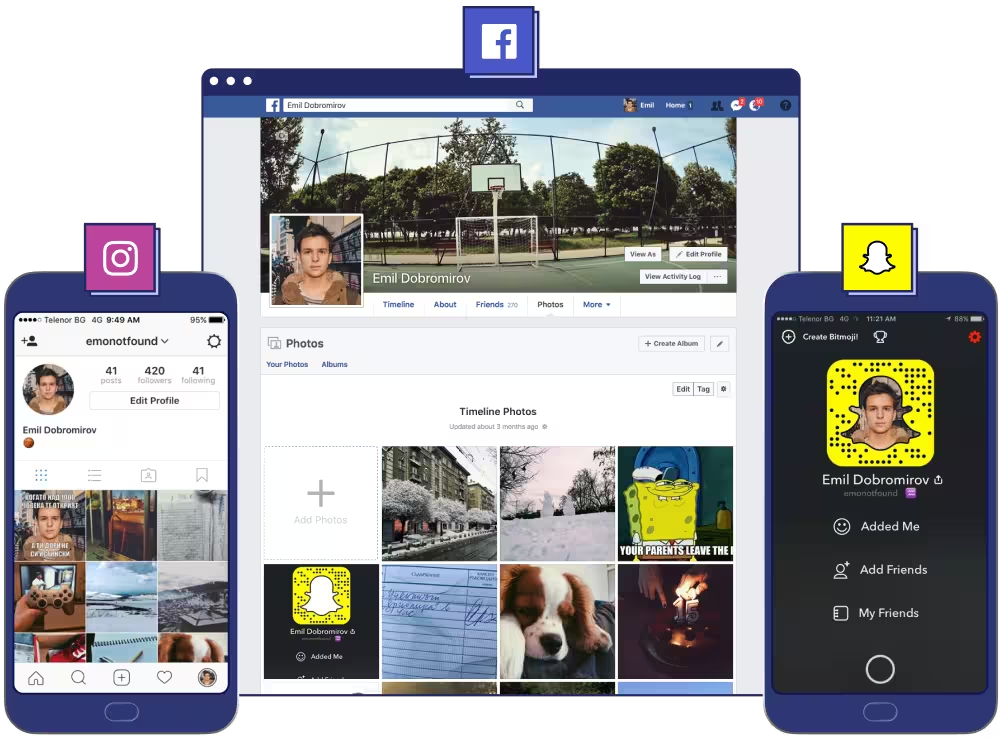
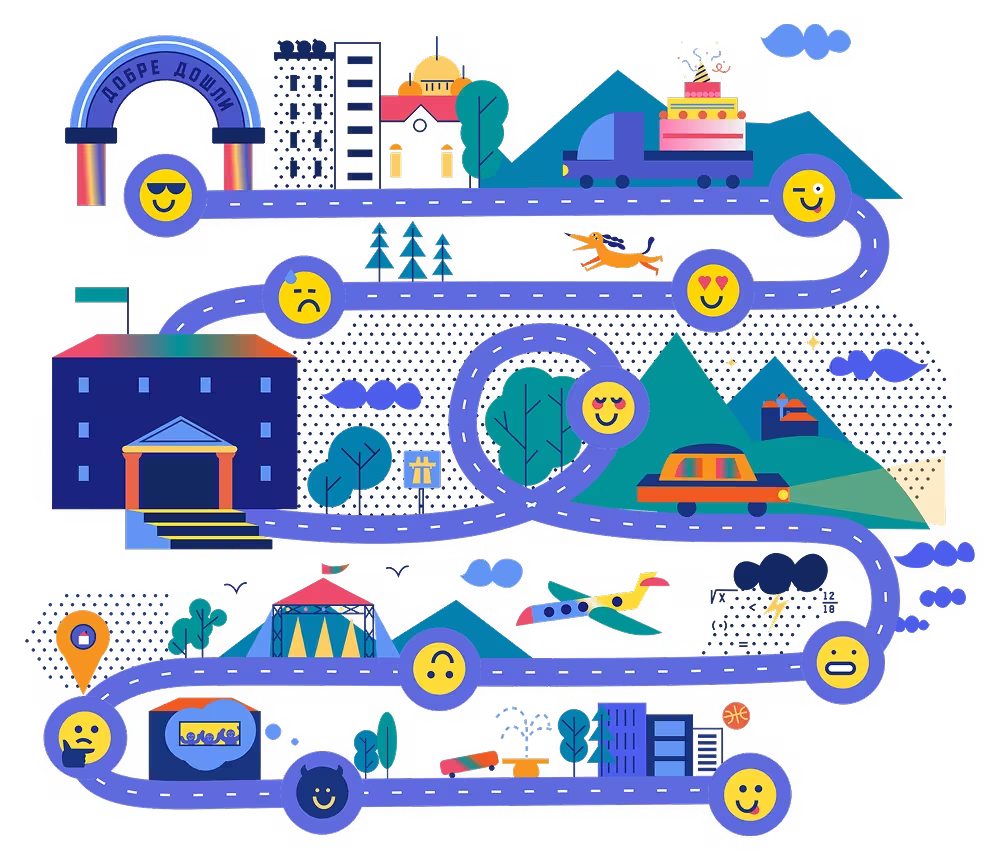
Illustration by Evgenia Nikolova
Results
24k
Visits over 7 days
4000+
People played
1000+
Finished the quiz
When the campaign was announced, Emo picked up 420 Instagram followers and 270 Facebook friends from real teenagers, none of whom had any reason to think he wasn’t real. Of everyone who started, 25% finished all ten questions, on a quiz that made you leave the site repeatedly to make any progress. Some participants never worked out that Emo wasn’t real. A few even sent his profiles thank-you messages.
Recognition
- 🥇 Gold Social Media FARA 2017
- 🥈 Silver Digital Campaign FARA 2017
-
🥈
Silver
Non-standard use of
digital and social channels FARA 2017 -
🥉
Bronze
Websites, Microsites
and Mobile Apps FARA 2017
Continue
reading
Mojo • Mobile app
Structure that converts
Putting structure back into the world’s first AI sex and relationship therapist with two new features, lifting trial conversion more than 20% each time.
Daye Diagnostic Tampon • Web platform
The result is not the answer
Turning a subscription box into a diagnostics platform and designing the journey from a potentially alarming clinical result to actually knowing what to do about it.